

Abuse Prevention through Culture Change Framework
Practical tools to help your organisation create a safer culture and prevent abuse, harassment and misconduct.
Background
The Abuse Prevention Through Culture Change Frameworkbegan with conversations among safeguarding and child abuse research professionals who recognised the need for practical, accessible tools to help organisations understand and address conditions that can contribute to abuse.
While mandatory requirements, Child Safe Standards and other legal obligations provide an essential foundation for organisational safeguarding, Kooyoora identified a need for a comprehensive, guided approach to long-term culture change.
In 2023, Kooyoora received a $35,000 grant from the National Centre for Action on Child Sexual Abuse to develop the framework. The project was led by Kooyoora’s Strategy and Quality team and overseen by CEO Fiona Boyle, with support from Laura Lindsay from Glasshouse Safeguarding, Professor Daryl Higgins and Jacqui Stewart from the Institute of Child Protection Studies at Australian Catholic University (ACU) who also contributed as members of the Project Advisory Committee.
As a key part of the project, Kooyoora commissioned a comprehensive literature review examining the underlying drivers that contribute to abuse within organisations. Drawing on existing research across disciplines and sectors, the review explored:
institutional culture
power dynamics
systemic barriers that can prevent organisations from adopting effective safeguarding measures
The framework was also informed by specialist expertise and consultation with people with lived experience of abuse in organisational settings.
The resulting framework translates this evidence and insight into practical tools that organisations can use to examine their culture, identify factors that may increase the risk of abuse and harassment, and develop plans for cultural and systemic improvement.
About the Framework
The Kooyoora Abuse Prevention Through Culture Change Framework is a practical organisational culture change and development framework designed to help prevent harmful behaviours, including abuse, harassment and misconduct.
It guides organisations through a process of meaningful self-reflection and continuous improvement, helping them examine how their culture influences safety and identify opportunities for positive change.
The framework has been developed for organisations of all sizes that are committed to creating a culture where people feel safe, respected and able to raise concerns. Rather than taking a compliance-based approach, it encourages organisations to look more deeply at their internal culture, including the values, behaviours, systems and power dynamics that shape people’s experiences.
Its primary aim is to help organisations identify cultural factors that may increase the risk of abuse and harassment. Insights gathered through the culture review process can then be used to:
recognise existing cultural strengths
identify risks and areas for improvement
develop priorities for cultural and systemic change
strengthen psychological safety
inform education and professional development
support continuous improvement over time
The framework includes comprehensive tools and instructions to help organisations undertake this process and develop an improvement plan based on their findings.

What the Research Tells Us
The comprehensive literature review examined research across disciplines and sectors to understand the underlying drivers of abuse within organisations and how culture change could strengthen prevention efforts.
It identified organisational culture as a significant influence on safety. The shared values, beliefs, norms and behaviours within an organisation shape how people interact, how decisions are made and how concerns are received and addressed.
Literature Review Findings
Positive Culture Factors
Organisational cultures characterised by:
respect and equality
diversity and inclusion
open communication
psychological safety
clear accountability
confidence to raise concerns
are more likely to support safer environments.
Risk Culture Factors
The risk of abuse and harassment may increase in cultures where:
inappropriate behaviour is overlooked or normalised
concerns are minimised or dismissed
accountability is weak
organisational self-preservation is prioritised over people’s safety
people who raise concerns are silenced or unsupported
unequal power dynamics remain unchallenged
These findings show that policies, procedures and compliance measures, while essential, are not enough on their own. Effective prevention also requires organisations to examine how their culture is experienced in practice and whether everyday behaviours, systems and decisions support people to feel safe, speak up and be heard.

How the Framework Can Support Your Organisation
Understanding your organisation’s culture is an important part of strengthening safety. The framework provides a structured way to examine what is working well and where improvements may be needed.
The framework tools guide your organisation through a process of self-assessment and reflection to help you:
define the characteristics of a positive and safe organisational culture
gather feedback about internal culture and perceptions of safety
identify cultural strengths, risks and areas for improvement
develop priorities and strategies for medium and long-term change
plan actions that respond to their particular findings and circumstances
““What if an organisation did everything in its power to create a culture in which everyone could overcome their own internal barriers to change and use errors and vulnerabilities as prime opportunities for personal and organisational growth?””
The framework looks beyond whether policies and procedures are in place to consider how culture is experienced in practice. It helps your organisation reflect on the behaviours, systems, relationships and power dynamics that shape people’s confidence to raise concerns and contribute to a safer environment.
The framework complements a compliance-based approach by helping your organisation examine the cultural factors that influence how safeguarding policies and practices operate in everyday settings. It is aligned with jurisdictional Child Safe Standards, health and safety legislation and Respect@Work reforms.

How to Use the Framework Tools
The framework serves as a practical toolbox to help your organisation examine its culture, gather feedback and identify opportunities for improvement.
The toolbox can be adapted to reflect your organisation’s size, structure and circumstances.
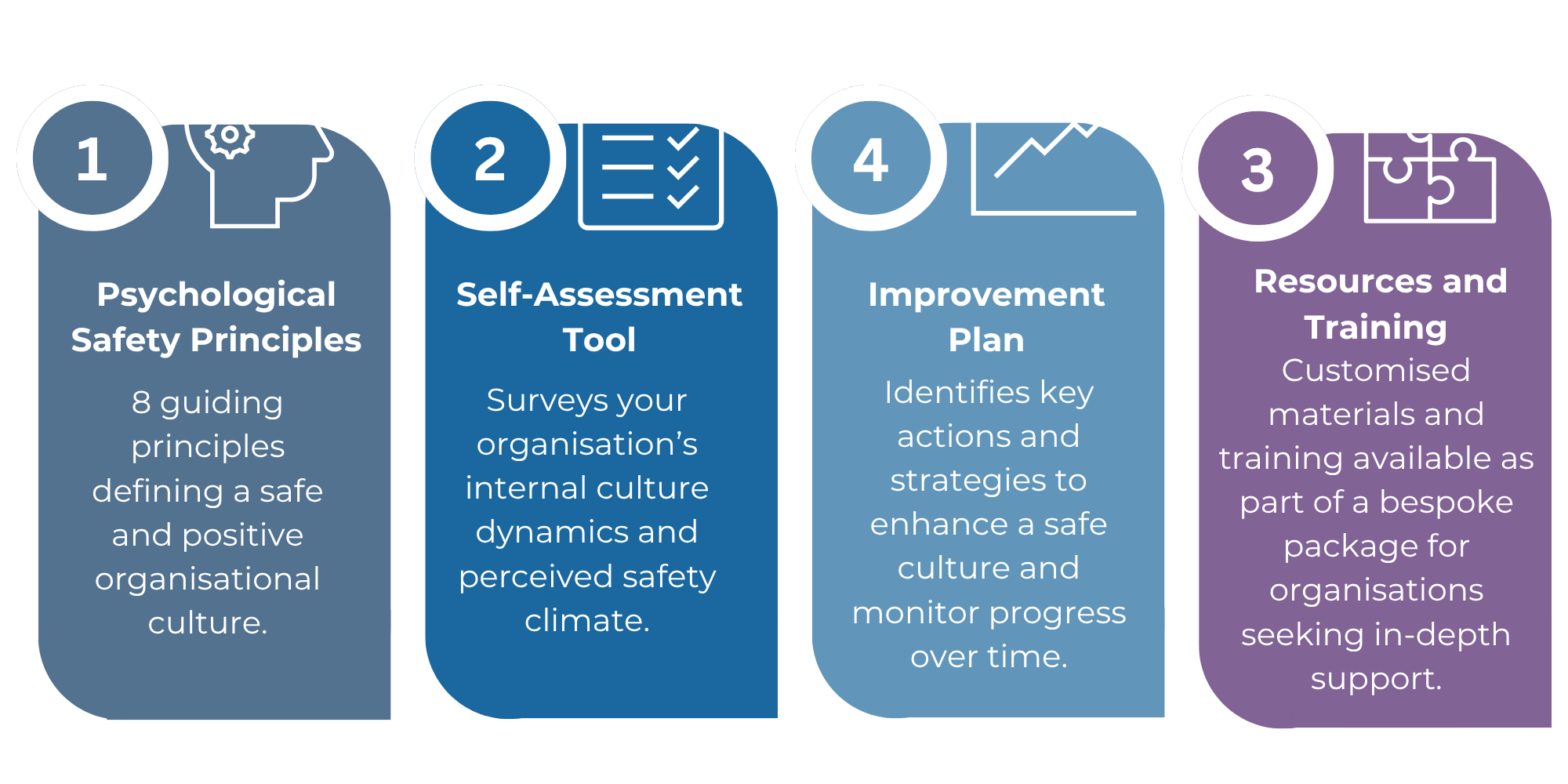
Your organisation can work through the four stages shown below, using the accompanying tools and comprehensive instructions to undertake the self-assessment process and develop a quality improvement plan based on the findings.
Abuse Prevention through Culture Change Framework Toolbox
Examine your culture. Identify risk. Plan positive change.
Practical tools to help your organisation create a safer culture and prevent abuse, harassment and misconduct.
Informed by a comprehensive literature review, lived experience and sector expertise, Kooyoora’s Abuse Prevention Through Culture Change Framework offers practical tools to examine organisational culture, identify areas for improvement and strengthen safeguarding practices.
The resources below provide background information and detailed guidance to help your organisation implement the framework. Resources are freely available to view online as interactive flipbooks or download as PDFs.
How to Access the Framework Tools
To view the framework publications online, click on any interactive flipbook. Use the arrow in the bottom right-hand corner to turn the pages and browse the content. Select full screen for easier viewing or click the download icon to save a PDF copy to your device.
Supplementary Materials
Download the additional Framework attachments and supporting documents.
Communication and Messaging for Self-Assessment Feedback
Guidance for introducing and communicating the purpose of the self-assessment to participants.
Organisational Culture Self-Assessment Tool (PDF)
An anonymous and confidential survey that captures participant perceptions of organisational culture.
Organisational Culture Self-Assessment Tool (Microsoft Forms)
The online Microsoft Forms version of the Organisational Culture Self-Assessment Feedback Form.
Cultural Safety Quality Improvement Plan
A template to review findings, identify priorities and plan actions for cultural and systemic improvement.
Microsoft Forms Setup Guide
A short video demonstrating how to configure and use the Organisational Culture Self-Assessment Tool in Microsoft Forms.