

Are Your Online Conversations with Young People Safe? Understanding the New Social Media Age Restrictions

From 10 December 2025, major social media platforms including Facebook, Instagram, TikTok, Snapchat, X, and YouTube are now required to take reasonable steps to stop Australians under 16 from creating or maintaining accounts.
If your organisation uses social media or messaging apps to share updates, coordinate activities, or stay connected with young people, these changes are important to understand.
The new Social Media Minimum Age Regulations (SMMA) are a timely reminder to pause and ask: Are our online communication practices as safe and transparent?
Child safety must extend to the digital world
These regulations were introduced to reduce the risks young people face online, such as exposure to harmful content, peer pressure, and inappropriate contact.
Embedding online safety into your organisational culture isn’t just about compliance. It’s about maintaining trust with families and creating environments where children and young people feel respected, protected, and heard whether you’re meeting in person, emailing, or using an app to communicate.
The new rules provide an opportunity to strengthen existing practices by ensuring that communication, online or offline remains safe, transparent, and accountable.
What this means for your organisation
You don’t need to stop communicating online, you just need to do it with clear boundaries and the right safeguards in place.
Here’s how to stay on track:
Keep it transparent
Make sure parents or guardians are included in group chats and know which channels you use.Use official or approved platforms
Avoid personal accounts. If you’re using digital tools, choose structured, safe options such as Google Classroom or Zoom, which are excluded from the new restrictions.Get consent
Always obtain written consent from parents or guardians before including young people in online groups or programs.Avoid private messaging
If a one-to-one message is absolutely necessary, copy in a parent or guardian and keep a record.Monitor and review
Assign someone to oversee online groups, check that messages remain appropriate, and act quickly if issues arise.
These practices protect young people and they also protect your staff, volunteers, and organisation.
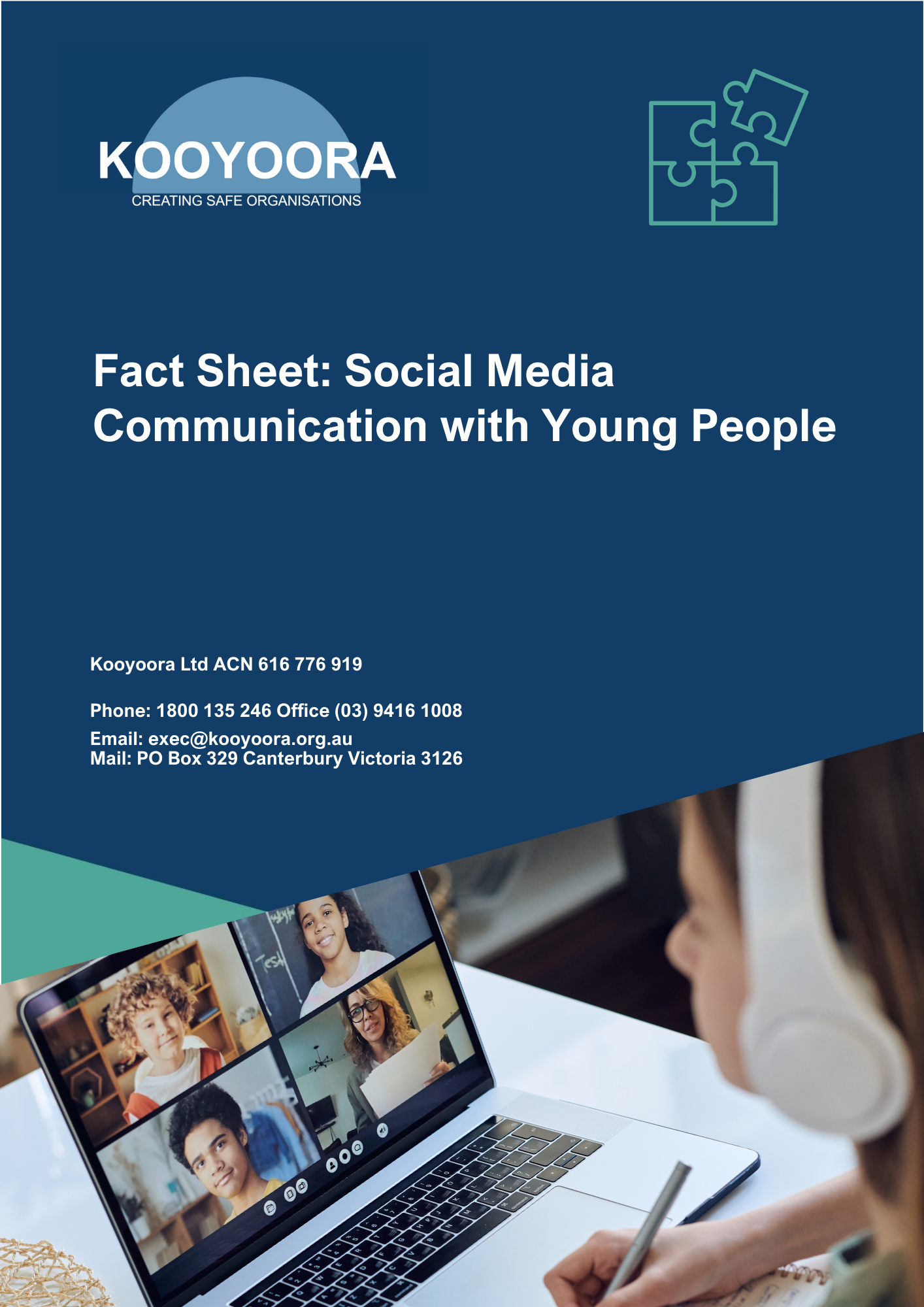
We’ve created a practical guide to help
To make it easier for organisations to adapt to these changes, Kooyoora has developed a new fact sheet “Social Media Communication with Young People.”
This resource translates the SMMA regulations into practical steps aligned with the National Principles for Child Safe Organisations.
Inside, you’ll find:
A clear overview of the new social media age restrictions.
Simple guidelines for staff and volunteers to follow.
Templates for parental consent, monitoring, and incident reporting.
Real-world case studies showing how to apply best practice.
Guidance on using Google Classroom as a secure, compliant alternative to social media.
The fact sheet is designed to help you maintain positive engagement with young people while ensuring every online interaction is safe, respectful, and compliant.
Turning compliance into confidence
For some organisations, this may be the first time reflecting deeply on how digital communication links to safeguarding. The new regulations provide a valuable opportunity to review policies, clarify expectations, and build stronger habits that protect both children and the adults who work with them.
By keeping parents in the loop, using approved communication tools, and setting clear boundaries, your organisation can create safer, more transparent spaces where everyone understands their role in protecting children. Safe communication isn’t about restriction, it’s about respect, transparency, and shared responsibility.
When digital safety becomes part of everyday practice, you not only meet regulatory expectations, you also strengthen community trust and model the values of openness and accountability that every child deserves.
Links
Kooyoora: Social Media Communication with Young People fact sheet – Flipbook
eSafety Commissioner: Social Media Minimum Age Regulatory Guidance – esafety.gov.au
Office of the Australian Information Commissioner (OAIC): Privacy and age-assurance guidance – oaic.gov.au
Google for Education: Google Classroom overview – edu.google.com/products/classroom
Child Safe Organisations: National Principles for Child Safe Organisations – humanrights.gov.au/child-safe-organisations